
Introduction – “borrowed” authority under fire
For years, savvy SEOs have piggy‑backed on the authority of well‑known domains to rank content that would never make page 1 on its own site. The tactic—nick‑named parasite SEO—involves publishing thin, often affiliate‑heavy articles on newspapers, universities or coupon portals simply because Google trusts the host domain. In spring 2024, Google drew a line in the sand with a brand‑new Site Reputation Abuse Policy and has been enforcing it with increasingly tough manual actions ever since. Today, even a single irrelevant sponsored post can put an entire section of your site—and your link‑building strategy—at risk. blog.google
This guide explains what the policy covers, how it has evolved, real‑world penalties, and—crucially—what ethical alternatives remain for guest‑post outreach in 2025.
Parasite SEO and site reputation abuse—plain‑English definitions
- Parasite SEO – Hosting third‑party content on a domain purely to leverage that domain’s reputation signals, with little or no genuine editorial value to the host’s typical audience.
- Site reputation abuse – Google’s umbrella term for any third‑party page placed on a trusted site “to manipulate Search rankings” rather than serve that site’s users. Typical hallmarks include off‑topic reviews (e.g. payday loans on an educational site) or coupon round‑ups wedged into a national newspaper. blog.google
Key point: Google doesn’t care whose by‑line appears. Intent and relevance to the host’s audience decide whether a page violates the policy.
Policy timeline – four enforcement waves so far
| Date | Milestone | What changed |
| 5th Mar 2024 | Policy announced | 60‑day notice before enforcement, bundled with the March 2024 core update. |
| 6th May 2024 | First manual actions issued | Hundreds of publishers receive “Site reputation abuse” notices in Search Console within 24 hours of the policy start. |
| 19th Nov 2024 | First manual actions issued | Google states that any level of host oversight still counts as abuse if the content is irrelevant or exploitative. |
| 12th Mar 2025 | First manual actions issued | Google tells site owners to no‑index abusive pages—not block them via robots.txt—before filing a reconsideration request. |
Expect further iterations. Google’s public messaging stresses that policy texts “may change as tactics evolve.”
Real‑world casualties (and the lessons hidden in them)
Forbes Advisor & other magazine verticals
Independent analyses show Forbes Advisor and certain CNN commerce sections shed 20–30 % of organic traffic after September 2024 as off‑topic credit‑card reviews and shopping round‑ups were devalued. While Google never name‑checked the brand, visibility graphs align with the first major enforcement wave. Marie Haynes
Lesson: Even prestigious news domains are not immune. Advertorial sub‑folders have to meet the same audience‑fit test as editorial content.
European coupon networks
In January 2025 Google appears to have mass‑emailed manual actions to coupon portals operating white‑label versions across Italy, Spain and France. Many sites vanished overnight; others had whole directories de‑indexed. Search Engine Land
Lesson: Scale is not a defence. Operating dozens of near‑duplicate coupon pages across high‑authority domains is precisely the pattern Google now targets.

Why your next guest post could trigger a penalty
Google’s wording is explicit: hosting third‑party pages “primarily for ranking advantage” is abuse, regardless of whether the post is labelled “Sponsored” or the host’s editor hit publish. Search Engine Land
The key danger signs:
- Irrelevant topic – Article bears no relation to host’s core coverage.
- Thin or AI‑spun copy – Limited original insight, over‑optimised anchor links.
- Commercial intent disguised as editorial – Price‑comparison tables, do‑follow affiliate links.
- Lack of author expertise – Generic staff writer bio or, worse, no bio at all.
- Pattern of off‑topic uploads – A tell‑tale sub‑folder bursting with product reviews.
If more than one of those rings true, you are flirting with a manual action.
Legitimate vs. spammy guest posts – a quick comparison
| Signal | Healthy guest post | High‑risk parasite post |
| Topic relevance | Closely matches host’s editorial beat | Completely unrelated niche chosen purely for keyword search volume |
| Editorial control | Pitch reviewed, copy edited, fact‑checked | Contributor uploads unchecked content via self‑service portal |
| Link treatment | 1–2 contextual links, often rel=”sponsored” | Multiple exact‑match anchors; no sponsor disclosure |
| Author expertise | Clear bio, credentials, contact info | Fake persona or outsourced pen‑name |
| Placement pattern | Occasional relevant contributions | Dozens of near‑identical posts in dedicated sub‑folder |
Anatomy of a penalty (and how to recover)
A Site reputation abuse manual action lands in Google Search Console under Manual actions > Site reputation abuse. The notice cites example URLs and explains that affected pages will not appear in Google Search until the violation is fixed.
Recovery checklist
- Audit every third‑party page – identify off‑topic or thin articles.
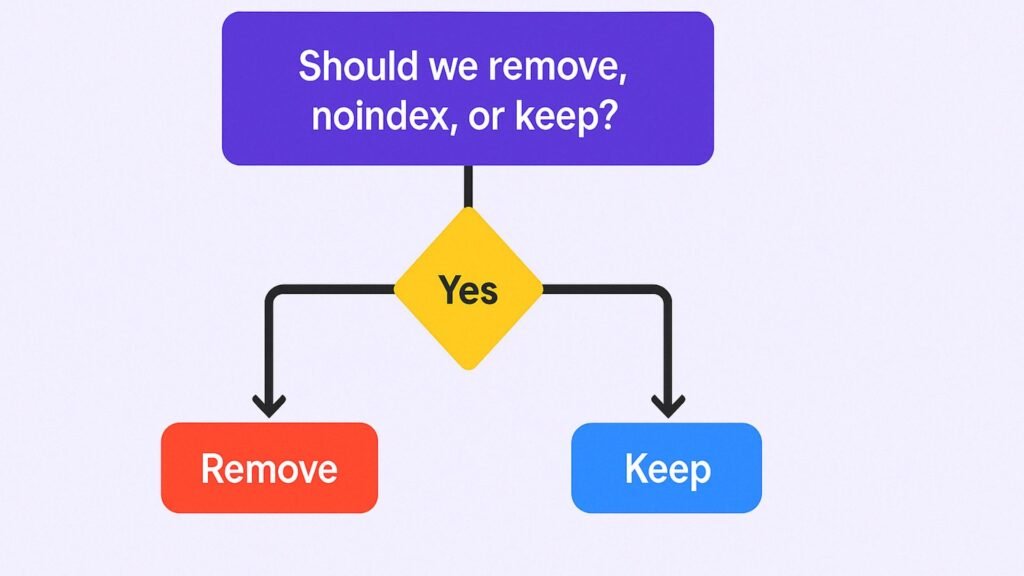
- Choose a remedy for each URL
- Best: Remove the page entirely.
- Acceptable: No‑index and keep live (e.g. for paid partnerships).
- Do not block with robots.txt; Google warns the no‑index must be crawlable. gsqi.com
- Add rel=”sponsored” to any remaining paid links.
- Submit a reconsideration request outlining actions taken. Official FAQs confirm there is no grace period—the page must comply before you click “Request Review.” Search Engine Journal
- Document changes internally for future audits.
Reconsideration typically takes 1–3 weeks; larger publishers sometimes see multiple rounds of clarification questions.
Ten‑question self‑audit (yes/no)
- Would we publish this piece if Google traffic were zero?
- Does the topic genuinely interest our regular readership?
- Is the author demonstrably qualified?
- Have we disclosed sponsorship or compensation?
- Are outgoing links natural, with varied anchor text?
- Does the post cite primary sources or original data?
- Is the content at least 800 words of unique insight?
- Has an editor fact‑checked and proof‑read the copy?
- Does the post link out to reputable third‑party resources, not just the sponsor?
- Are we limiting guest posts to < 10 % of monthly uploads?
One or two “No” answers ⇒ investigate. Three or more ⇒ high risk—act now.
Safer alternatives to build links in 2025
- Data‑driven digital PR – Commission mini‑surveys or scrape public datasets and pitch exclusive angles to journalists. These links are earned, not rented.
- Expert commentary services – Platforms like Help A B2B Writer and ResponseSource connect you with journalists hunting quotes—no money changes hands.
- Sponsored content with full transparency – If you must pay, insist on
rel="sponsored"and topic‑alignment. Treat it as brand‑building, not pure SEO.
- First‑party research hubs – Publish white papers or industry benchmarks on your own domain to attract natural citations.
- Partnership podcasts & webinars – Co‑create long‑form content; show notes often include high‑authority backlinks.
These methods align with Google’s quality guidelines while still generating authoritative mentions.
Action plan for editors & outreach teams
| Task | Owner |
| Update contributor guidelines to ban irrelevant topics | Head of Content |
| Automate rel=”sponsored” tag for any paid link | Dev Ops |
| Build an internal register of guest posts & outbound links | SEO Lead |
| Train editorial staff on new policy red‑flags | HR & SEO |
Pro tip: integrate the yes/no audit into your CMS so editors must tick compliance boxes before publishing.
Frequently asked questions
Does one irrelevant guest post trigger a site‑wide penalty?
No—but Google can de‑index only the offending directory or entire sub‑domain. If abuse is systemic, expect broader impact. Search Engine Journal
Can I move guest posts to a sub‑domain to stay safe?
Unlikely to help. Google treats sub‑domains as part of the host unless they are clearly independent, and the policy explicitly targets sub‑domains covering off‑topic content. Search Engine Land
How long does a reconsideration request take?
Anywhere from a few days to several weeks. Complex cases with hundreds of URLs can take multiple review cycles.
Is ‘nofollow’ good enough?
‘Nofollow’ helps, but Google states the content itself must serve users; simply changing link attributes does not fix abusive intent. Search Engine Journal
Final takeaway
Google’s march against site reputation abuse is not a one‑off crackdown—it is a sustained campaign to erase low‑value third‑party content from the SERP. In 2025 the safest path is simple: publish guest content only when it enriches your audience. Use the audit checklist above, ruthlessly prune risky legacy posts, and pivot outreach efforts to transparent, data‑led PR. Do that, and guest‑posting remains a powerful—and penalty‑proof—tool in your link‑building mix.