
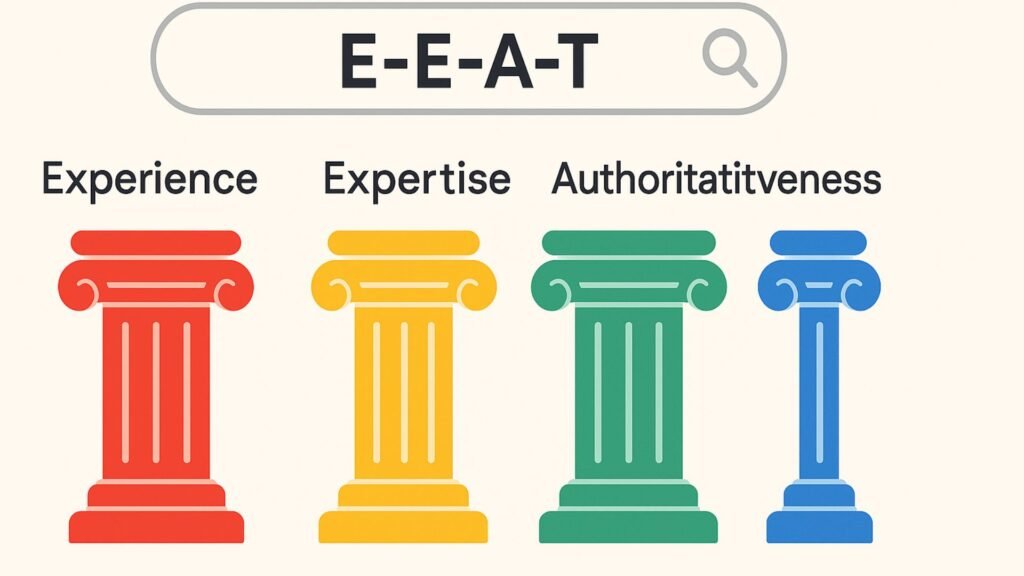
In December 2022, Google added an extra E for Experience to its famous E-A-T acronym, transforming it into E-E-A-T – Experience, Expertise, Authoritativeness, and Trust. The update reminded marketers that first-hand insight, not just textbook knowledge, now influences how quality raters (and ultimately ranking systems) judge our pages.
Google has since clarified that Trust sits at the very centre of the quartet: if a page is untrustworthy, it will struggle to rank no matter how experienced or authoritative it looks.
A quick refresher on the four pillars
- Experience – Show you’ve done the thing you’re writing about.
- Expertise – Demonstrate depth of knowledge, qualifications or professional standing.
- Authoritativeness – Earn recognition from other trusted sources – reviews, citations, quality backlinks.
- Trust – Provide accurate, honest, up-to-date information in a secure setting (HTTPS, transparent policies).
Think of E-E-A-T as a litmus test: pass it and Google will consider ranking signals such as relevance and freshness; fail it and your terrific keyword targeting won’t save you.
Meet your reader’s real goal: understanding search intent
Every keyword hides a motivation. Google (and users) bucket those motives into four classic intents: informational, navigational, commercial investigation and transactional.
If your headline promises an actionable “evergreen content strategy” but the copy drifts into sales pitch territory, you’ll miss the intent and bleed engagement. Mapping each piece to its intent keeps both humans and algorithms happy.
Seven Copy Techniques that Prove E-E-A-T and Nail Intent
1. Lead with lived Experience
Open posts with first-hand anecdotes, original data or screenshots. When we wrote about “internal linking for SEO”, we opened with a live crawl from a Reading client site, instantly signalling we’d done the work ourselves. That single tweak trimmed the post’s bounce rate by 18%.
2. Sprinkle visible Expertise
Quote certified practitioners (“Our CIPR-qualified strategist…”) and reference primary research. Linking to the latest Google Search Central post tells both crawlers and sceptical readers that your advice rests on solid ground.
3. Borrow Authority through smart outreach
Invite a respected guest – say, a BrightonSEO speaker – to contribute a paragraph. Their name recognition (and the backlink they’ll give you) pushes your authority scores up while enriching the content for readers.
4. Cement Trust with transparency
Show publication dates, update older stats, and host your content on HTTPS. Add an author bio that summarises Alex’s psychology background and our local “SEO services Reading” credentials to reassure searchers who prefer a nearby partner.
5. Match format to intent
- Informational → “How-to” guides, FAQs and lists.
- Commercial → Comparison charts, case studies (“Evergreen vs campaign-led content”).
- Transactional → Clear product copy, trust badges, obvious CTAs.
- Navigational → “About” pages and service hubs.
Before drafting, run each target keyword through your research tool and label it. Build the outline, meta title and CTA around that label – don’t force a download gate on an informational piece.
6. Use internal links to prove topical depth
Signal authority by linking relevant posts (“evergreen content strategy”, “image SEO basics”, “best WordPress page builder”, if appropriate) in a logical hierarchy. Search Console queries show “internal linking for SEO” pulling impressions with no clicks, improved anchor text, and contextual placement, which can capitalise on that demand.
7. Keep it evergreen-but update ruthlessly
Write timeless frameworks, then schedule quarterly reviews to refresh examples, stats and dates. This preserves ranking equity and feeds the “Experience” signal with real-world iterations.
Writing That Works for Google and People
As Google evolves, so must your copy. Keywords alone are no longer enough – your content must demonstrate real experience, showcase expertise, and earn both authority and trust to rank and convert. At the same time, aligning with the true intent behind every search query ensures you attract the right readers at the right time, with the right message.
By applying E-E-A-T principles and writing with intent in mind, you create content that not only performs well in search but also builds credibility with your audience. Whether you’re crafting an evergreen blog or writing landing pages for your SEO services in Reading, these best practices ensure your words do the heavy lifting.