
Introduction
Despite living in an age where dashboards can chart customer behaviour by the minute, many British SMES are still marketing on instinct rather than evidence. A 2024 survey of almost 2,000 decision‑makers showed that 67 % of UK small businesses have no marketing action plan at all, and over half lack even a basic business plan (themarketingcentre.com). When strategy is missing, wasted spend soon follows: procurement analysts at Proxima estimate that as much as 40 – 60 % of the average marketing budget is burned on poorly‑targeted or unmeasured activity (Performance Marketing World).
The problem is not a shortage of data but a shortage of insight. Customer lists can be split by age, postcode or purchase history in seconds, yet those splits remain blunt until we understand why each group behaves as it does and how to communicate with them in language that resonates. Bridging that gap—from raw segmentation to living, psychology‑driven consumer understanding—is the focus of this blueprint. Over the next pages, you’ll see how systematic data audits, behavioural frameworks, and a quarterly cadence of insight can transform scattered numbers into actions that earn their keep in 2025’s competitive UK market.
The Groundwork: Sorting the Lego Bricks
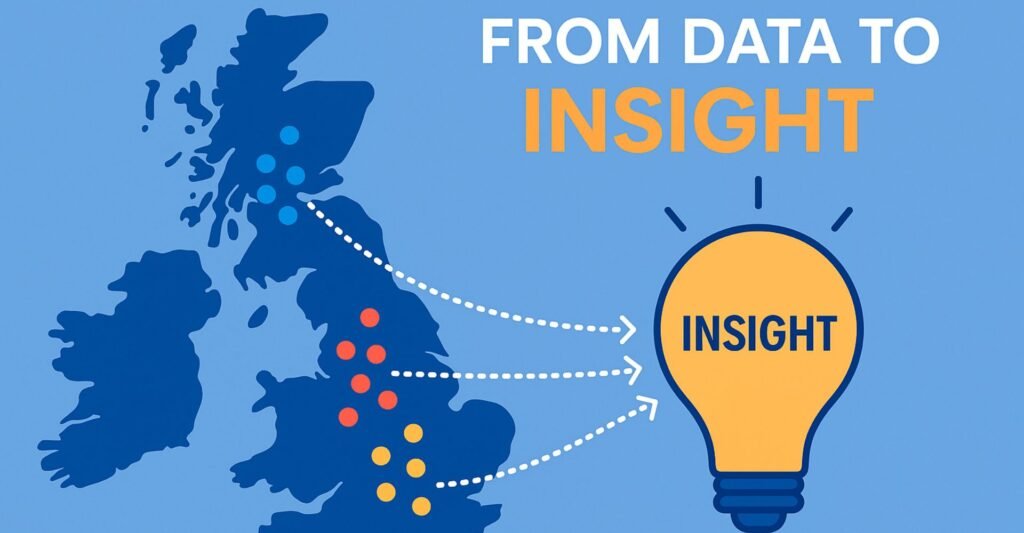
Market segmentation, at its simplest, is an act of sorting. We take a heterogeneous mass of buyers and break it into coherent piles: mothers in Berkshire, Gen‑Z train commuters, bargain‑hunters in the North‑East. Demographic frameworks (age, income), psychographic ones (values, lifestyles), behavioural ones (purchase frequency, brand loyalty) and needs‑based models (jobs‑to‑be‑done) all have their place. The trick is to choose the right tool for the question at hand.
Suppose you run that Reading café. A demographic lens might tell you that half your customers are thirty‑somethings, but it will never reveal why the queue is longest between 07:45 and 08:10. A behavioural cut, in contrast, quickly flags a “weekday commuter” segment defined less by age than by a ritual: dash to the station, flat white in hand, back on the road. Suddenly, the question shifts from “Who are they?” to “What job are they hiring us to do?”—and that is a far more fruitful place to start tailoring service.
Data sources to feed such a model abound. Google Analytics and Search Console expose how unknown users behave online; EPOS systems and loyalty apps chart what known customers actually buy; public bodies like the Office for National Statistics, YouGov and Ipsos MORI paint the broader social backdrop. The task is not to hoard everything, but to assemble only the Lego bricks that build a useful foundation for action.
Fast and Slow Brains, Triggers and Friction
Segmentation alone produces an anatomical sketch; psychology colours it in. Daniel Kahneman’s famous distinction between System 1 (fast, intuitive) and System 2 (slow, deliberative) decisions is a potent lens here. The commuter’s daily coffee is almost pure System 1—habitual, impulsive, and emotionally charged by the smell of espresso. Choosing an accountant, by contrast, is a System 2 deliberation: comparative quotes, risk aversion, rational cost–benefit analysis.
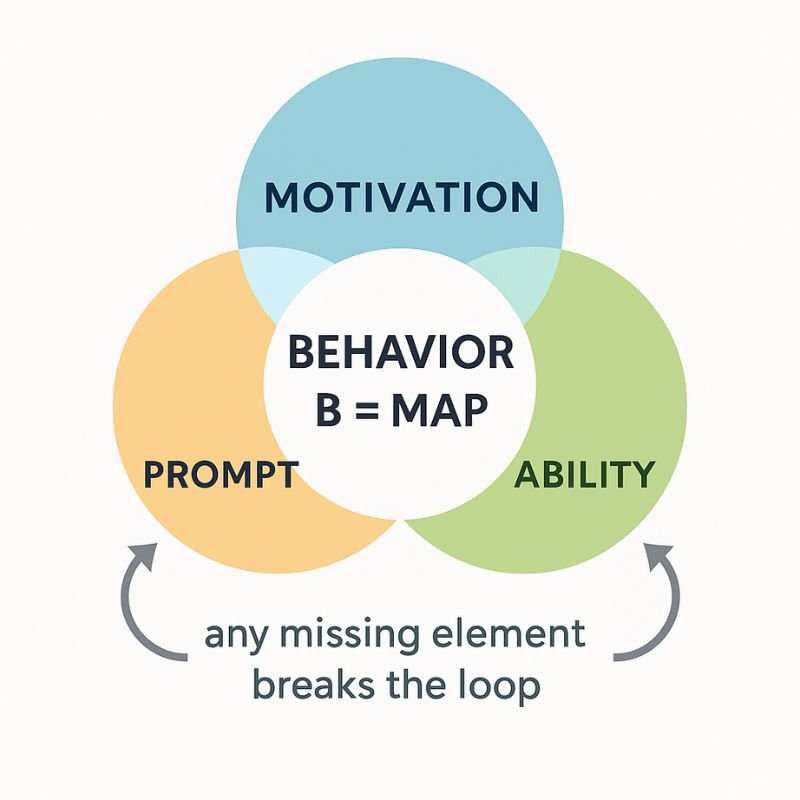
Overlay that with BJ Fogg’s Behaviour Model—behaviour occurs when motivation, ability, and a prompt converge—and we acquire a diagnostic toolkit. Low conversion on a landing page? Perhaps the ability bar is too high (the form feels long on a phone screen). Basket abandonments among “Budget Brian” weekend shoppers? Maybe the prompt lands on Friday morning, long before the family plans its treat. Every poor metric becomes a solvable puzzle rather than a black box.
Building Personas
At this stage, segments metamorphose into personas—one‑page portraits with names, faces and foibles that everyone in the business can visualise. Commuter Claire might be a 29‑year‑old marketing executive who boards the 08:16 to Paddington and values reliability above all else. Weekend Family Brian may be a 42‑year‑old father of two who hunts for value deals and child‑friendly menus on Saturday mornings. These sketches crystallise motivations, frustrations and preferred channels: Claire ignores email newsletters but responds instantly to a push notification at 07:45; Brian scrolls Facebook after the kids fall asleep.
Personas are not fictional indulgences. When taped to the office wall—or pinned in the Slack handbook—they give marketing, product and customer‑service teams a shared language. Designers know why the mobile menu needs a one‑tap “Favourites” shortcut; baristas understand the emotional payoff of having Claire’s cup ready the moment she steps in. In short, the persona turns abstract data into lived empathy.
Insight in Motion: The Quarterly Cadence
Consumer insight should be a pulse, not an annual check‑up. The most resilient UK SMEs treat it as a quarterly ritual:
- Q1 brings a post‑holiday stock‑take: what segments over‑ or under‑performed, and why?
- Q2 invites experimentation: A/B‑test a new loyalty hook for Claire, or shift Brian’s discount message from price to “value bundle”.
- Q3 is for qualitative deep dives: five interviews, a heat‑map session in Microsoft Clarity, perhaps a focus group.
- Q4 consolidates the learnings and sketches the roadmap for the year ahead.
A simple .ics calendar drop keeps the rhythm intact. Insight then becomes culture, not coercion.
Tools of the Trade: Democratising Data
Twenty years ago, you needed a research budget to rival Procter & Gamble to do any of this. In 2025, most of the essentials are free.
- Google Looker Studio stitches GA4 traffic, Shopify sales and email engagement into living dashboards a founder can consult with their morning tea.
- Microsoft Clarity shows exactly where visitors rage‑click or hover in uncertainty—a goldmine for the “ability” layer of Fogg’s model.
- YouGov Profiles and Ipsos trend briefings ground anecdotal hunches in nationally representative data; they also alert you to looming cultural shifts, such as the growing willingness of Gen Z to pay a premium for sustainable packaging.
Yet tools are only as powerful as the questions we ask. The café that noticed 64 per cent of Instagram followers preferred a reusable‑cup discount over a new latte flavour was not leveraging artificial intelligence. It was simply asking the right question, in the right channel, at the right moment.
Omni-channel Insight and Action
When personas are alive and insights current, every customer touch‑point ripples with relevance. SEO titles speak the language of the reader’s brain‑state: rapid, benefit‑led cues for System 1 searchers (“Order in two taps—flat white waiting!”). Detailed value propositions for System 2 researchers (“Compare five accountancy packages and forecast three‑year ROI”).
PPC campaigns mirror the split. Geo‑fenced ads around Reading station nudge Claire with a 10‑minute click‑and‑collect window; region‑wide retargeting banners serve Brian a weekend family combo. Even price positioning benefits: national studies reveal that 93 per cent of Britons still list price as a primary purchase factor, so sustainability copy is reframed as cost‑saving (“Cut waste, cut bills”) rather than moral virtue alone.
Email flows inherit the nuance. Claire receives a minimalistic, emoji‑light push at dawn; Brian opens a friendly Friday afternoon newsletter brimming with bundle imagery and a personalised voucher code. Each persona hears a voice that feels written for them, because it was.
Ethics and the Long View
All of this sits under the watchful eye of UK regulations and a public increasingly attuned to privacy. Regular GDPR audits, transparent data notices, and a light hand with retargeting do more than avoid fines; they build the kind of trust that lengthens customer lifetime value. Data is a privilege, not a right, and British consumers are quick to reward brands that treat it respectfully.
A Final Invitation
The journey from raw segmentation to vivid consumer insight is neither mystical nor reserved for giants with deep pockets. It is a disciplined habit of asking who, probing why, testing how, and measuring whether it worked. Practised quarterly, it turns marketing from a cost line into an engine of compounded learning. For Xander Strategies, it is also the core promise we make to every client: that data, interpreted through the lens of human psychology, will show the shortest route from attention to trust to loyalty.